

Smelly Cup! Menstrual Cup Odor? Here's How to Fix it!

How to Prevent and Eliminate Menstrual Cup Odor
Frustrated with a bad-smelling menstrual cup? You’re not alone, and yes, we can help!
We’d love to tell you that MeLuna menstrual cups never develop an odor, but the truth is: any menstrual cup can start to smell under certain conditions. The good news? There are easy ways to prevent and fix it.
Why Do Menstrual Cups Smell?
There are two main reasons menstrual cups develop odors:
1. Protein and Organic Build-Up
Menstrual fluid is more than blood. It also contains vaginal and cervical secretions, cells, proteins, and other organic material. Blood itself contains proteins, including hemoglobin. Over time, small amounts of this material can remain on the cup’s surface and contribute to a lingering odor, even when the cup looks clean and is washed regularly.
You may also notice that your cup smells different from one period to another. Your personal body chemistry is not exactly the same every cycle. Hormonal changes, vaginal pH, the amount and composition of menstrual fluid, hydration, medications, sexual activity, and other normal changes can affect how menstrual fluid smells and how noticeable that odor becomes on a menstrual cup.
This means a change in the way your menstrual cup smells is not automatically a sign that something is wrong. A mild metallic, earthy, or blood-like odor can be associated with menstrual fluid itself. You may also find that your cup develops more odor during some cycles than others, even though your cleaning routine has not changed.
What matters more is the type of odor and whether you have other symptoms. A distinctly fishy, unusually foul, or persistent odor, particularly when accompanied by changes in discharge, itching, irritation, pain, or burning, deserves more attention.
2. Extended Wear
Wearing your cup too long can allow bacteria to multiply, especially in warm, moist environments. This can lead to an unpleasant smell, even if your cup appears clean after rinsing.

When Odor Signals a Medical Concern
If your menstrual cup or menstrual fluid develops a strong fishy or unusually foul odor, particularly if the odor persists, it can sometimes be associated with conditions such as:
Bacterial vaginosis
Vaginitis
Trichomoniasis
Odor by itself does not tell you whether you have an infection. However, if you also experience symptoms such as unusual discharge when you are not menstruating, itching, irritation, pelvic discomfort, pain, or burning, contact a healthcare provider for advice.
A sudden change in odor without other symptoms is not necessarily cause for alarm. Your vaginal environment and menstrual fluid can naturally vary. Pay attention to what is normal for you and seek medical advice when an unusual odor is strong, persistent, or accompanied by other symptoms.
How to Prevent Menstrual Cup Odor
A good cleaning routine helps prevent odor by addressing both menstrual residue and microorganisms. These are related, but cleaning and disinfection serve different purposes.
Empty and clean your cup at least every 8–12 hours. Regular cleaning removes menstrual fluid, proteins, cells, and other organic material before residue has more opportunity to remain on the cup’s surface. Rinsing and cleaning during your period can therefore help prevent odor from building up in the first place.
Don’t wear your cup longer than recommended, including overnight. The longer menstrual fluid remains in the cup, the more time bacteria have to multiply and interact with the proteins and other organic material present in menstrual fluid.
Disinfect your cup after every period. Cleaning removes menstrual fluid and residue, while disinfection reduces microorganisms that ordinary washing may leave behind. This can be particularly helpful when a cup has developed a lingering odor despite regular cleaning.
Let your cup dry completely before storing it. A clean, dry cup is less hospitable to microorganisms than one stored while still damp. Air circulation also gives lingering odor compounds an opportunity to dissipate.
Store your cup somewhere breathable. Avoid sealing a damp menstrual cup in an airtight container. Once completely dry, keep it in a breathable pouch or ventilated container, or out in the open. See menstrual cup storage options here.
Consider rotating between two menstrual cups. Having a second cup allows one cup plenty of time to be thoroughly cleaned and completely dried before you use it again.
MeLuna offers 10% off when you buy more than one cup, applied automatically in your cart.
Why Disinfection Can Help with Menstrual Cup Odor
Washing and disinfecting your menstrual cup are not quite the same thing. Cleaning physically removes menstrual fluid, proteins, cells, and other residue from the cup. Disinfection is an additional step that reduces microorganisms remaining on the cup after cleaning.
This distinction can matter when you are dealing with odor. Microorganisms can contribute to unpleasant smells as they interact with organic material. If your clean cup develops a persistent odor, thoroughly cleaning it first and then disinfecting it may be more effective than repeatedly washing it alone.
Always clean your cup before disinfecting it. Disinfection should not be used as a substitute for removing visible menstrual fluid or residue.
How long should you boil a menstrual cup?
Boil for 3–5 minutes, or follow the specific care instructions provided for your menstrual cup.
What are the best menstrual cup disinfection methods?
Boiling in water
Using a steam disinfection device for the recommended cycle
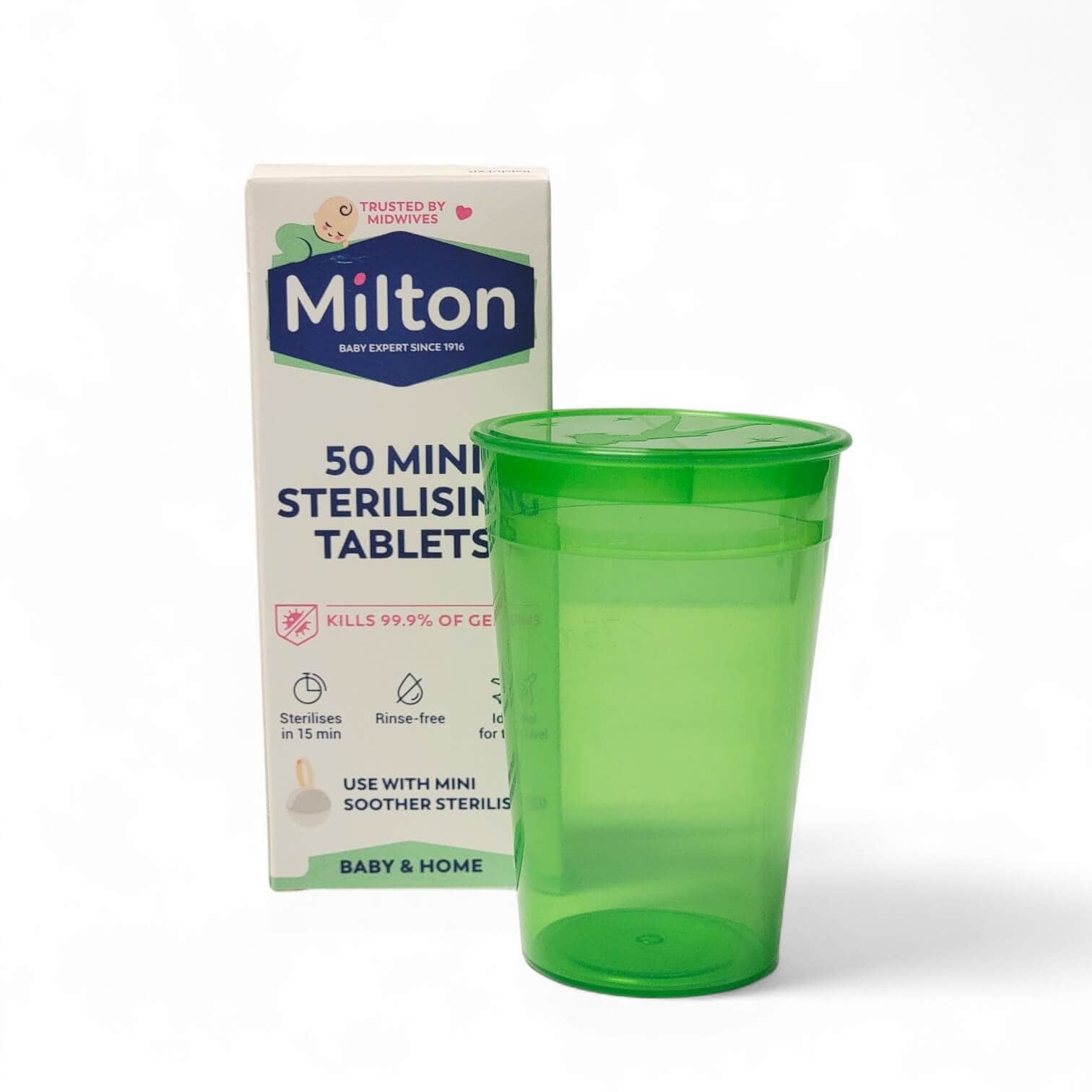
Using disinfection products like Milton Tabs
Shop Milton Tabs here

How to Eliminate Odors from a Clean Cup
Sometimes a menstrual cup can remain perfectly clean but still retain a noticeable smell. A lingering odor does not necessarily mean that the cup is dirty or unsafe. Odor compounds can remain noticeable after the menstrual fluid that caused them has been removed.
In many cases, time and ventilation can help:
Let the clean cup air out. Place your dry, thoroughly cleaned cup in a well-ventilated area for a few days. Air circulation allows lingering odor compounds to gradually dissipate instead of trapping them inside a closed container.
Make sure it is completely dry before storage. Trapped moisture can create conditions that favor microbial growth and may contribute to new odors.
Give it time. A menstrual cup does not necessarily need another round of aggressive cleaning simply because a faint odor remains. If the cup has been thoroughly cleaned and disinfected, allowing it to sit in a clean, ventilated area may be all that is needed.
Rotate between cups if needed. Using a second cup gives the first one several days to dry and air out completely.
For stubborn odors, try an appropriate disinfection treatment. Milton Tabs can be used occasionally to help refresh the cup and address persistent odors or stains.
Need Help Cleaning Your Cup?
For complete cleaning and disinfection instructions, check out our Cup Cleaning & Disinfection Guide.

Related Posts





Leave a comment