

How Do I Know If My Menstrual Cup Is Too Long?

Your menstrual cup opens correctly and may even be leak-free, but you can feel it. It sits close to the vaginal opening, creates pressure, or simply never seems completely comfortable.
Your menstrual cup may be too long for the space available in your body.
Menstrual cups come in different heights as well as different diameters. If your cervix sits lower during your period, a standard-height or longer cup may simply require more room than you have available.
The solution may not be a smaller cup. You may need a shorter one.
What Does "Too Long" Actually Mean?
A menstrual cup needs enough room to sit comfortably inside the vaginal canal below or around the cervix.
If your cervix sits relatively low, there is less available space for the cup body and handle.
Signs your menstrual cup may be too long include:
-
The cup or handle sticks out of the vaginal opening.
-
The base of the cup sits very close to the vaginal opening.
-
You can feel the cup while sitting, walking, bending, or exercising.
-
The cup creates uncomfortable pressure.
-
You feel as though the cup is pressing against your cervix.
-
The cup feels like it is slipping out even though it is positioned correctly.
-
You repeatedly push the cup higher, but it settles back down.
-
Trimming the stem or changing the handle does not solve the discomfort.
-
The cup fits comfortably on some days of your period but feels too long on others.
If several of these sound familiar, cup height is worth considering.
Why Does Cervix Height Matter?
Your cervix is the lower portion of the uterus that extends into the upper vagina.
Its position varies naturally from person to person. Some people have a cervix that is relatively easy to reach, while others have difficulty reaching it with a finger.
Cervix position can also change.
During the menstrual cycle, hormonal changes can affect the position and feel of the cervix. That means the amount of room available for a menstrual cup may not be exactly the same every day of your period.
For some people, those changes are small enough that they never notice them.
For others, a cup may fit comfortably later in the period but feel too long when the cervix is sitting lower.
Do I Have to Measure My Cervix?
Not necessarily.
Measuring cervix height can provide useful information, but your experience with a menstrual cup can tell you quite a lot.
If a standard-height cup sits completely inside your body, remains comfortable, and does not create pressure, you probably do not need a shorter cup simply because you can reach your cervix.
If the cup consistently sits too low, protrudes, or feels uncomfortable because there is not enough room for it, that is useful fit information.
How the cup actually fits matters.
Is the Cup Too Long, or Is It Just the Handle?
Before changing cup height, figure out which part is bothering you.
Sometimes the cup body fits perfectly well, but the handle extends too far.
If you use a stem-style handle, you may be able to trim it gradually until you find a comfortable length.
You can also choose a more compact handle.
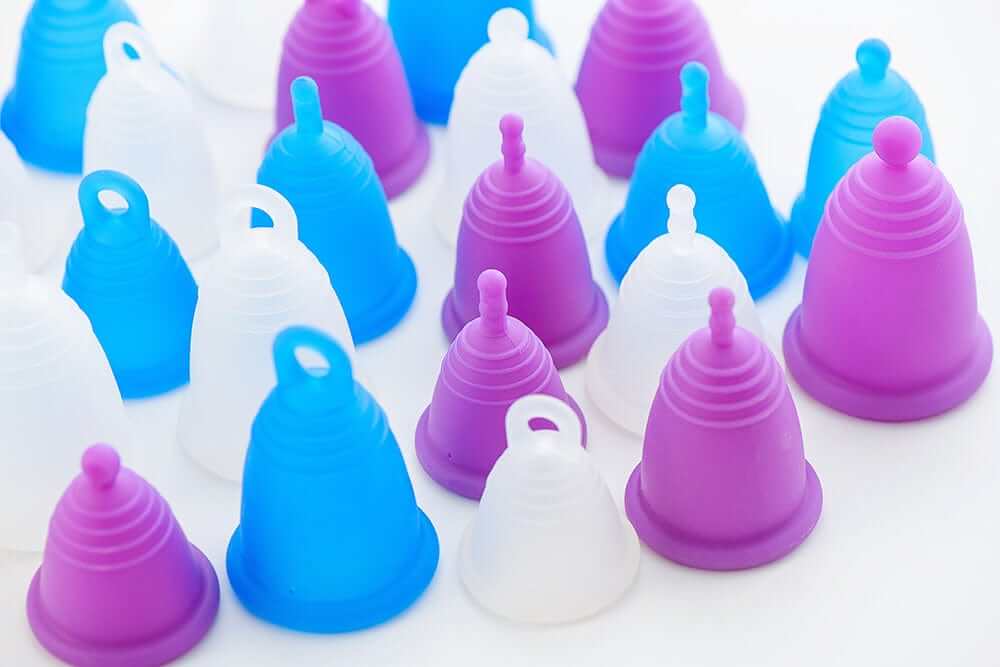
MeLuna offers three handle styles:
-
Ball is our smallest and least noticeable handle.
-
Ring is easy to locate and grip during removal.
-
Stem provides the most reach and can be trimmed to the length you prefer.
If changing or shortening the handle solves the problem, you may not need a shorter cup body at all.
But if the base of the cup itself sits too low or creates pressure, trimming the handle will not make the cup shorter.
That is when cup height becomes important.
Can I Just Cut the Entire Stem Off?
If your cup has a trimmable stem, removing some or all of the stem can help when the stem is the only part causing discomfort.
Just make sure you do not damage the actual cup body while trimming.
After trimming, ask yourself where the base of the cup sits.
If the cup body is comfortably inside the vaginal canal and you no longer notice it, you may have solved the problem.
If the base still sits at or near the vaginal opening, the cup itself may be too long.
What If My Cup Presses Against My Cervix?
Some people can feel uncomfortable pressure when a menstrual cup is too long for their available internal space.
Your cervix may also extend partially into the cup. That by itself is not necessarily a problem. Bodies vary, and menstrual cups do not all sit in exactly the same position.
The important question is comfort.
A menstrual cup should not cause persistent pain or significant pressure. If the cup consistently feels as though it is pressing uncomfortably against your cervix, a shorter cup may give your body more room.
Can a Cup That Is Too Long Press on My Bladder?
Some cup users notice bladder pressure or changes in urination while wearing a menstrual cup.
Cup position, diameter, firmness, and your individual anatomy can all influence how a cup feels in the surrounding pelvic area.
If the sensation seems related to the cup sitting too low or occupying more space than is comfortable, reducing cup height may help.
But height is not the only possible factor. A very firm cup or a cup with a diameter that does not suit your body can also feel different from another cup.
Use the complete experience with your current cup rather than assuming that every pressure sensation means the cup is too long.
Does a Low Cervix Mean Something Is Wrong?
No.
Cervix height varies between individuals, and having a naturally low cervix does not by itself indicate a medical problem.
Some people simply have less space available for a menstrual cup.
There are also circumstances in which pelvic anatomy can change. Pregnancy, childbirth, hormonal changes, aging, pelvic surgery, and changes in pelvic support can affect how a menstrual cup fits.
If a cup that was once comfortable suddenly begins sitting much lower, that is worth paying attention to, especially if you are also experiencing new pelvic symptoms.
But needing a shorter menstrual cup does not by itself mean there is a medical problem.
What Is a Low Cervix Menstrual Cup?
A low cervix menstrual cup has a shorter cup body so that it requires less internal space.
MeLuna Shorty cups are approximately 30% shorter than the corresponding Standard MeLuna cups. Compared with some longer menstrual cups from other brands, such as DivaCup, the difference can be as much as 45%.
The important part is that choosing Shorty changes the cup height without forcing you into a smaller diameter.
MeLuna Shorty comes in Small, Medium, Large, and XL diameters. That means you can choose a shorter cup while still selecting the diameter your body needs for a comfortable, reliable fit.
If My Cup Is Too Long, Should I Choose a Smaller Size?
Not automatically.
This is one of the most important distinctions in menstrual cup fitting.
Cup height and cup diameter solve different problems.
If your current cup has a good diameter and does not leak, choosing a narrower cup simply because it is shorter may create a new problem.
A cup that is too narrow can shift, slide, or leak even if its height is comfortable.
If your current diameter works, keep that useful information and look for a cup with less height.
With MeLuna, you can choose Shorty height without automatically choosing a smaller diameter.
Don't Choose Shorty Just Because a Smaller Cup Seems Easier
The opposite is important too.
A shorter cup is not automatically more comfortable for everyone.
If you have an average or high cervix, there may be more room around a very short cup. That can allow the cup to tilt or shift and may interfere with a reliable fit.
A shorter cup also has less capacity than a comparable standard-height cup.
If a Standard cup fits comfortably, there is usually no benefit to choosing Shorty simply because it looks smaller or less intimidating.
Choose a shorter cup because your body needs less cup height.
What If I Have a Low Cervix and Heavy Flow?
A shorter cup naturally has less internal capacity than a taller cup of a similar diameter.
But that does not mean someone with a low cervix has to use a very small cup.
This is another reason diameter and height should be considered separately.
If you need Shorty height but also need more capacity, a larger Shorty diameter may be appropriate.
You may also need to empty your cup more frequently than someone who can comfortably wear a taller cup.
Comfort and secure fit come first. A high-capacity cup does not help if there is not enough room in your body to wear it comfortably.
What If My Cup Is Too Long Only on Some Days?
That can happen.
Your cervix does not necessarily remain at exactly the same height throughout your period.
You may notice that your cup feels too long during the first day or two but becomes comfortable later.
If the difference is minor, changing your handle length or placement may be enough.
If the cup is consistently uncomfortable whenever your cervix is lower, you may prefer a shorter cup that accommodates those lower-cervix days.
Your own experience over several cycles can be more useful than judging the fit from a single insertion.
What If My Old Cup Suddenly Feels Too Long?
Pay attention to what has changed.
If you have successfully worn the same cup for a long time and it suddenly begins sitting lower, do not immediately assume that the cup itself has changed.
Cervix position and pelvic support can change over time.
Pregnancy and childbirth can affect the pelvic floor and supporting tissues. Hormonal changes and aging may also affect how your pelvic anatomy feels and how a menstrual cup fits.
Sometimes the change is simply noticeable because you are paying more attention to your cup position.
But a new feeling of pelvic heaviness, pressure, bulging, or a noticeable change in pelvic support deserves more attention.
Switching From Another Menstrual Cup?
A cup that feels too long gives you valuable information.
You do not necessarily need to start over with your cup selection.
If you know which cup you currently use, our Switching Menstrual Cup Brands Guide can help you compare its dimensions with MeLuna sizes before choosing your next cup.
Then ask yourself:
-
Did the diameter provide a reliable, leak-free fit?
-
Was the firmness comfortable?
-
Did the cup stay open?
-
Was the only real problem its length?
-
Was the cup body too long, or was it only the handle?
If everything worked except the height, keep the features that worked and change the one that did not.
For example, if your previous cup had a comfortable diameter and firmness but sat too low, look for a similar diameter in a shorter cup.
That is one of the advantages of having height and diameter as separate choices.
Don't Change More Than You Need To
Your current menstrual cup can tell you a lot about what your body needs, even if the cup itself is not quite right.
If the diameter works, keep that information.
If the firmness works, keep that information.
If you like the handle, keep that information too, unless reducing handle length would solve the problem.
Then focus on height.
With MeLuna, diameter, height, firmness, and handle style are separate choices. You can change the part of your cup that is causing the problem without automatically changing everything else.
Let Your Experience Help Choose Your Next Cup
If you are switching from another menstrual cup, our MeLuna Cup Quiz can use your experience to help fine-tune your recommendation.
Tell us what worked and what didn't.
If your previous cup felt too long, we can consider a shorter cup. If it leaked despite opening correctly, diameter may need attention. If it became compressed, firmness may matter. Your answers can also help determine which handle style may be most comfortable for you.
If you are new to menstrual cups, you do not need to know your exact cervix height before taking the quiz. Your answers can help us choose a comfortable starting point.
Your cup should fit your body. Finding the right height is one important part of getting a comfortable, reliable fit.
When Pressure or a Change in Cup Position Deserves More Attention
Having a low cervix or needing a shorter menstrual cup can simply be part of your normal anatomy.
Some people also find that wearing a menstrual cup makes urination or bowel movements more difficult. Depending on your anatomy and how the cup sits, you may prefer to remove your cup first. If the issue occurs only while the cup is inserted and resolves when you remove it, that can simply be part of finding the cup and routine that work best for your body.
What deserves more attention is a new or persistent change that is not limited to wearing your cup.
If you experience pelvic pain, persistent pressure, a feeling of heaviness, a vaginal bulge, new urinary or bowel symptoms, or a noticeable change in how low your cervix or pelvic organs seem to sit, consider discussing those symptoms with a healthcare professional.
These symptoms can have causes unrelated to menstrual cup fit. A shorter cup may make wearing a menstrual cup more comfortable, but it should not be used as a substitute for evaluating new or concerning pelvic symptoms.






Dejar un comentario