

Low Cervix? Menstrual Discs Aren’t Your Only Option

If you have a low cervix, you may have heard that a menstrual disc is your best option. Perhaps you tried a standard menstrual cup, found it too long, and assumed cups simply weren’t for you.
But what happens when your disc keeps slipping, leaking, or coming untucked?
You still have options. Menstrual cups come in different lengths, including shorter designs made specifically for a low cervix. A standard cup feeling too long does not mean every menstrual cup will feel that way.
Why are menstrual discs recommended for a low cervix?
Menstrual discs have a shallow collection basin and sit differently from menstrual cups. Rather than extending down the vaginal canal like a cup, a disc sits around the cervix, with its front rim tucked behind the pubic bone.
That position can make a disc comfortable for someone who finds a standard menstrual cup too long.
However, having a low cervix does not automatically mean a disc will fit securely. Cervix height is only one part of your anatomy.
Why doesn’t my menstrual disc stay in place?
A menstrual disc needs support in a specific position. Its back rim sits behind the cervix, in the posterior fornix. Its front rim tucks behind the pubic bone, where the tissue-covered contour provides a ledge that helps hold the rim in place.
Not everyone has a sufficiently pronounced ledge to support a disc securely. If that support is insufficient, the disc may slip, shift, or come untucked, even after correct insertion.
A different disc size or design may help some people. But if your anatomy does not support a secure fit, there is not much you can change to make that disc work. Repeated slipping does not necessarily mean you need more practice.
For a closer look at placement and anatomy, read Leaking or Slipping Menstrual Disc?.
A disc that doesn’t fit does not rule out a cup
Menstrual cups use a different mechanism to stay in place. A cup opens inside the vaginal canal and forms a seal against the vaginal walls. It does not rely on its front rim staying tucked behind the pubic bone.
That difference matters. The anatomy that makes a disc difficult to keep secure does not automatically prevent a menstrual cup from working.
The key is choosing a cup with dimensions that suit your body.
What if menstrual cups have always felt too long?
A cup can have the right diameter and still be too long.
If the cup body sits too close to your vaginal opening, trimming the stem may not solve the problem. Trimming changes the handle length, but it does not shorten the collection basin.
A cup designed for a low cervix has a shorter body. That gives you another option when a standard cup takes up more space than you comfortably have available.
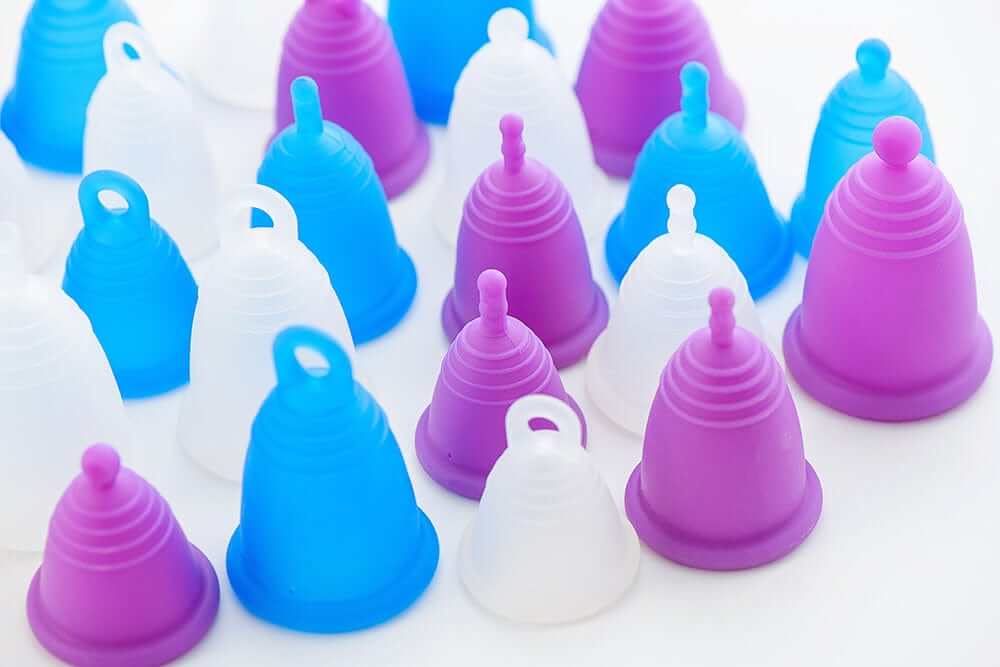
The MeLuna Shorty is designed specifically for this need. It combines a shorter cup body with four diameter sizes, so you can consider length and width separately.
A low cervix does not mean you need the smallest diameter
When a cup feels too long, choosing the smallest size may seem like the logical next step. But a smaller cup in the same range may also be narrower.
Your cervix height helps determine the length you need. Your cup’s diameter helps determine whether it forms a secure seal.
You may need a shorter cup without needing a narrower one. Choosing a design made for a low cervix allows you to address the length problem while still considering the diameter that fits you.
Which option should you choose?
If your menstrual disc feels comfortable and stays secure, it may be a good match for your body.
If it repeatedly slips or comes untucked despite correct insertion, you do not have to keep trying to make the same design work. A shorter menstrual cup offers a different approach to fit.
Having a low cervix gives you a reason to consider cup length. It does not limit you to menstrual discs.
Explore our MeLuna Shorty low cervix cups, or take our Menstrual Cup Quiz for help choosing your cup.





Dejar un comentario